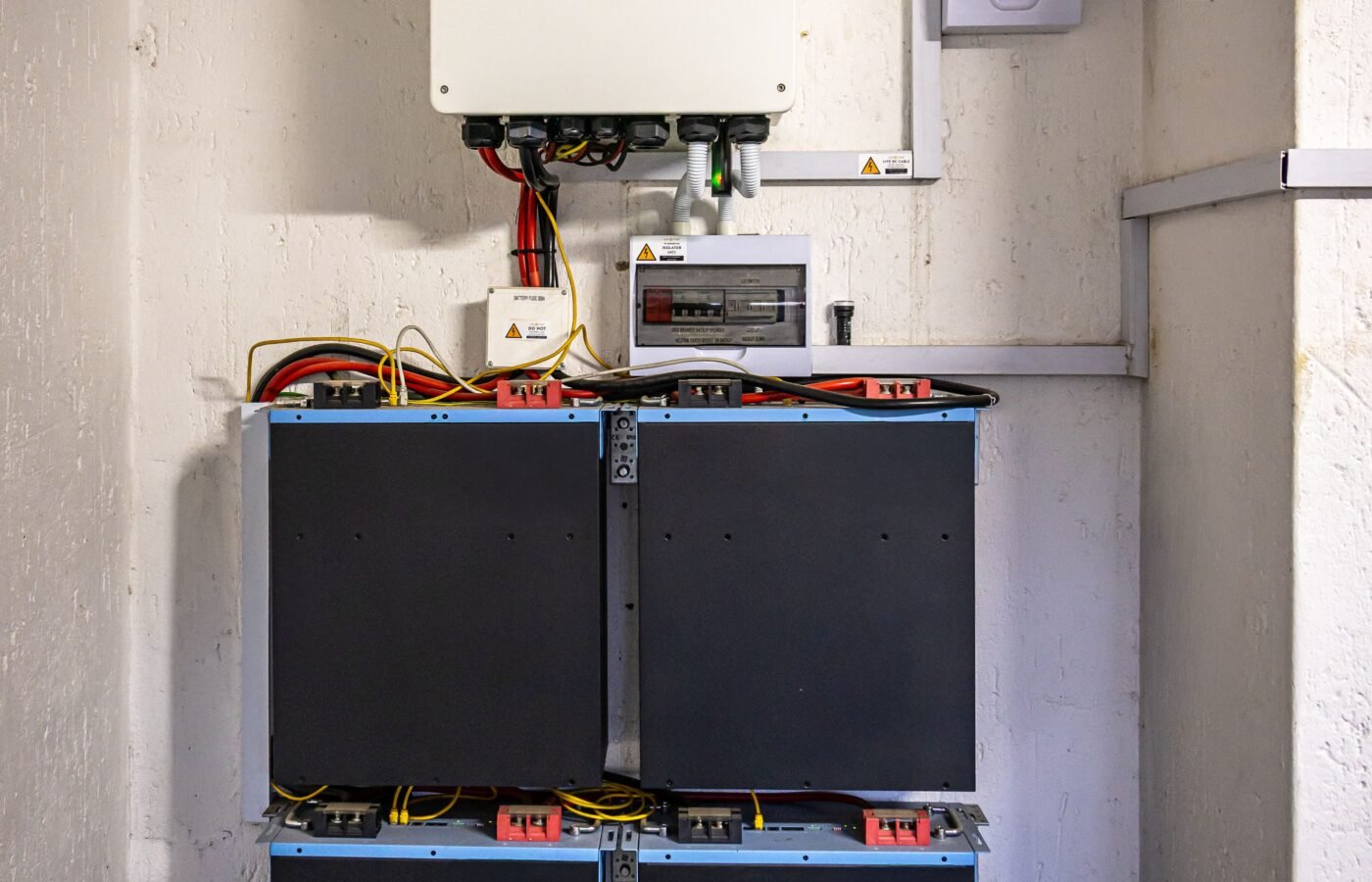
Free Solar Battery Calculator: Size Your Off-Grid Battery Bank in 2 minutes

“How big of a battery bank do I actually need” is the single most common question I ran into researching this site, so I built this solar battery calculator to answer it properly.
If you do not know your daily loads yet, the off grid cost calculator will work them out from your appliances and hand you a number to bring back here.
There’s a real formula behind it: your daily power use, adjusted for the losses every system has, times how many days you want to run without sun, divided by how deep you can safely drain your specific battery chemistry. Get any one of those wrong and you’ll either overspend on batteries you don’t need or end up in the dark on day two of a cloudy stretch.
One thing worth knowing before you size anything: the number you land on here changes how long that bank will actually last. Size it tight and you’ll cycle deep every night, which gets you the energy faster and the replacement sooner. Size it generously and you cycle shallow, which is easier on the battery but means paying for capacity you may never use. I went through what actually decides battery lifespan separately, including why the same battery gives one person twelve years and another four.
Punch in your numbers below. If you don’t know your daily use off the top of your head, the estimator inside the calculator will build it for you from your actual gear.
Battery bank size calculator
I get asked some version of “how big of a battery bank do I actually need” constantly, so here’s the math laid out. Fill in your daily power use and a couple of system details, and this’ll give you both the usable capacity you need and the amp-hours to actually go shop with.
You’ll need roughly
0.00 kWh total capacity
- Daily use
- —
- Adjusted for losses
- —
- Days of autonomy
- —
- Usable capacity needed
- —
- Total (nameplate) capacity
- —
- Amp-hours at your voltage
- —
This is quick math to get you in the right neighborhood, not a substitute for a real load study, especially once you’re sizing anything past a weekend cabin. Manufacturer-rated capacity, temperature, and battery age all shift the real-world number, so treat this as a starting point for conversations with a supplier or installer, not a final spec. For a closer look at picking an actual battery brand and chemistry, see our Off-Grid Battery Comparison guide.
How this solar battery calculator works
Four things drive the number: your daily energy use in watt-hours, how many days of backup you want, your battery chemistry’s depth of discharge (LiFePO4 can handle a deeper drain than lead-acid, which is a big part of why it costs more but sizes smaller), and a loss factor to cover your inverter, wiring, and the battery’s own round-trip efficiency. I default that loss factor to 15%, which is a reasonable middle-of-the-road number, but you can adjust it in the advanced section if you know your setup runs less efficiently.
A few caveats
This gets you in the right neighborhood, not a final spec. Manufacturer-rated capacity, real-world temperature swings, and battery age all shift the actual number, so treat this as your starting point for a conversation with a supplier or installer, not something you hand a contractor as-is. And once you know your target capacity, the harder question is usually which battery to actually buy, that’s what I get into in the Off-Grid Battery Comparison guide once that’s live.
Battery brands publish their own depth-of-discharge and cycle-life numbers, and they’re worth checking directly since they vary more than people expect, Battle Born and LiFeBlue’s numbers compared here are a good example of that spread.
If you haven’t worked through the full system yet, my guide on how to go off-grid with solar walks through everything else you’ll need.
FAQ
How do I calculate the right battery bank size for solar?
Take your daily energy use in watt-hours, bump it up 10-15% to cover inverter and wiring losses, multiply by how many days of backup you want, then divide by your battery chemistry’s usable depth of discharge. That’s exactly what this solar battery calculator does for you.
What size battery bank do I need for off-grid solar?
It depends entirely on your daily use and how many cloudy days you want to survive without recharging. A small cabin running lights and a fridge might need 5-8 kWh. A full-time homestead with a well pump and modern appliances can easily need 20-30+ kWh. There’s no universal number, that’s exactly why this solar battery calculator exists instead of a one-size-fits-all figure.
How long do off-grid solar batteries last?
LiFePO4 batteries are generally rated for 3,000-6,000+ charge cycles, which works out to a decade or more of daily use for most off-grid setups. Lead-acid batteries last a fraction of that, often 300-500 cycles, which is a big part of why LiFePO4 costs more upfront but usually wins on cost per year.
Are solar batteries worth it for off-grid living?
For a grid-tied home, that’s a real debate, since you’re weighing battery cost against a grid connection that already works. For off-grid living, it’s not really a debate, the battery bank isn’t a backup, it’s your only power source after sundown. The real question isn’t whether to get one, it’s how to size it right, which is what this page is for.
Can I use this calculator for a solar gate opener?
Yep, it works for any small 12V load. Just don’t forget the stuff that never switches off. On a typical gate, the board and receiver sitting there waiting 24/7 use more power than the motor does, which I break down in how to size a solar gate opener battery.